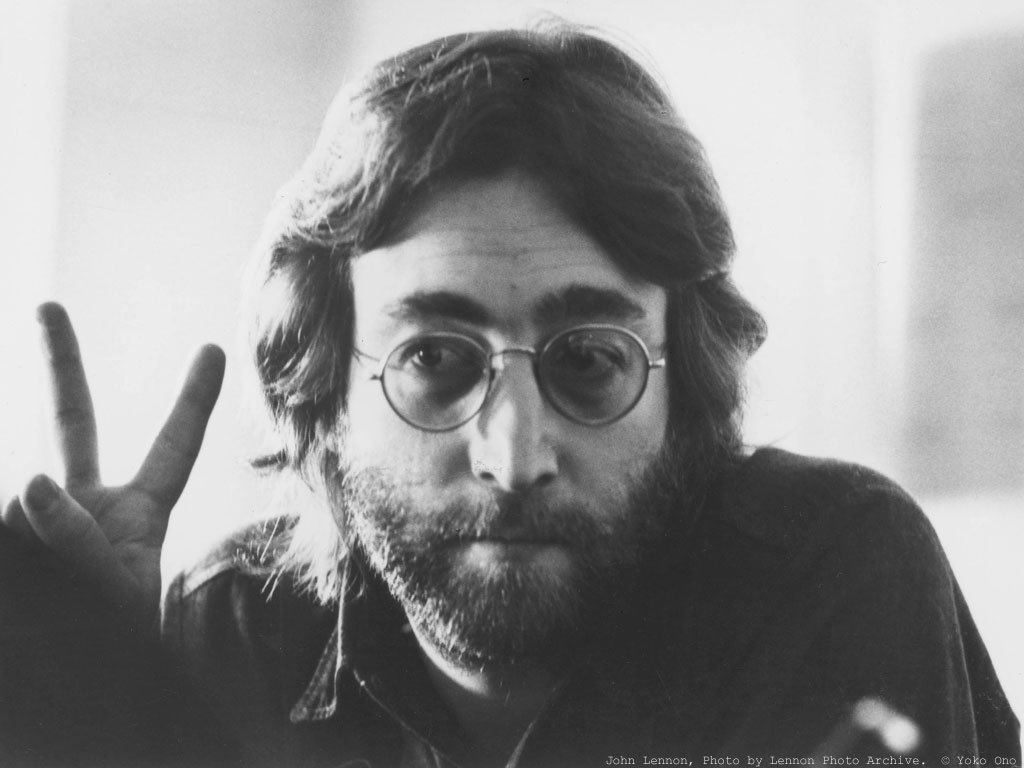
In another era, narrow-minded fear-mongers would have raged over the appearance of jazz icon Duke Ellington, country legend Johnny Cash, R&B start Marvin Gaye or socially progressive rock idol John Lennon. Music and words are powerful, and those who manage to create a wide fan base are sure to create fear among the holders of the status quo, even with positive messages, if they are speaking in a musical language that is already new and misunderstood. All of the musical genres mentioned above were attacked by older-generation mainstream media when they first came into popularity because they were new, misunderstood and their potential influential power feared.
Hip Hop could be one of the most feared and misunderstood cultural phenomena of the past couple decades. Part of the body of work created under its banner (Gangster Rap for example) certainly brings some justification to the bad rap many conscious leaders in the movement are fighting to overcome, but Hip Hop as a musical genre is no more threatening to the moral base of our society than Rock & Roll. It fact, a musical genre is not by itself the expression. Rather, it is a vehicle for artistic expression that might speak to a certain span of history and generation, being taken over by a new musical genre and phenomenon every couple decades.
Currently, Hip Hop, however, as a genre, is of critical importance as one of the largest music-driven cultural youth movements in the world. If political and social leaders and media could embrace this instead of misjudging it and building greater fear and division between generations and cultures, they could create huge positive shifts in the state global consciousness.
Today, there are artists working within the Hip Hop genre that are raising social awareness and shifting that global consciousness in the same way many of our musical icons of rock and R&B (Bob Dylan, Fela Kuti, Marvin Gaye, Curtis Mayfield, John Lennon, Bob Marley…) did during the late 60′s and early 70′s. Common is one of those artists. Others include K’NAAN, the Roots, Nas, Talib Kweli, Nneka, KRS-One, MV Bill, Shad, Damien and Ziggy Marley, and many more. These artists take their work and their social influence seriously and responsibly, representing a global movement spreading positive messages and awareness via the universal language of music, which so happens to fall under the misunderstood banner of Hip Hop.
Then again, maybe it is simply the freedom of speech that is truly feared by those hoping to prevent change and hide the truth. Contrary to that, music is an essential, powerful tool for us to unveil the truth and break down the barriers to understanding that continue to feed the fear and conflict at home and around the world. I personally applaud Common for his high standard of both art and social consciousness and am inspired and moved by those with the courage and strength to do the same, despite the criticism and resistance.
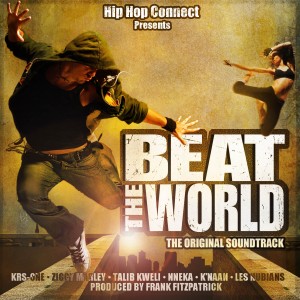
With the upcoming release of the Beat the World soundtrack, I wanted to introduce more of the talented and inspiring artists I had the good fortune of collaborating with.
I learned about British rapper Sway while I was in London recording KNAAN. I was trying to find the most talented and credible local Hip Hop artist to represent England on the record, and Sway fit the bill.
Aside from his talent – obvious on his records and supported by numerous accolades (MOBO, Mercury, BET, Urban Music Awards…), Sway is a very cool and straight ahead guy. He was truly a pleasure to work with. You can hear the results in our song “Infinite Love,” also featuring the modern day Hip Hop icon – Talib Kweli.
You can hardly talk about conscious Hip Hop in America without Talib Kweli’s name coming up in the conversation. His lyrical wizardry combined with his insight and knowledge on social issues have earned him global respect, from both industry insiders and the public. He is also a solid and focused human being, making him a another real pro and an honor to work with.
Talib graced the track for the 2nd verse of “Infinite Love,” helping us to bring together the international Hip Hop communities.
The final verse of the song features a lesser known, but extremely talented Los Angeles-based freestyler – Lowd. Like many talented freestylers, Lowd doesn’t write anything down. He can come up with verse, after verse – all off the top of his head. I asked Lowd how he was able to come up with so many complete ideas on the spot. He said he read and digested any good writing he could get his hands on – from Shakespeare to classic novels. And when he gets on the mic, it all comes out – Lowdstyle.
“Infinite Love” is one of the main dance team themes I wrote for the film. I wrote the hook and recorded the track before we shot the film, so the choreographer could work out the routines. Once the film was shot, I flew to London to record Talib and Sway. The rest is in the music.
I just listened to the final master for my soundtrack to Beat the World. While I have to say I had many highlights and wonderful experiences working with the different artists from around the world, the two souls that really touched my heart were the petite, Nigerian-born powerhouse Nneka and the sweet, elder son of the legendary Bob Marley – Ziggy Marley. The song we did together, “Express Yourself,” is also the one that resonates the most to me on a personal level, and feels the most universal.
I originally wrote the song for a montage of the three main characters in the film dancing on rooftops in their respective home towns around the world – Berlin, Toronto and Rio de Janeiro. Each was dancing to work through an emotional challenge or setback. I wanted to capture the essential need we have as people to express ourselves through whatever means we can – dancing, art, singing; to use our inner creativity to move our emotions through our bodies. Both Ziggy and Nneka are true artists and great teachers in that way. They are dedicated to the truth – both to their own voice and to giving voice to those who are too often afraid to speak. Each word comes direct from the heart, uncensored, and resonates with anyone open to listen.
It was a true honor to work with such amazing talents and beautiful individuals. Their words, their energy, and their voices not only gave my and the director’s (Robert Adetuyis) original visions a life; they took it to a whole other level. For that, I feel blessed and grateful, and proud to be able to finally share “Express Yourself” with the world.
I would be remiss, however, if I didn’t also give praise and thanks to my musical brother Eeday, who gave his beautiful voice and spirit to the choruses of “Express Yourself.” Although lesser known to the world, Eeday shined through and brought the third element to this international collaboration (Jamaica, Nigeria and the US).
So if you are feeling stuck, silenced, mad, sad or happy – take a moment and Express Yourself. And if you need a little motivation to get you started, give a listen as Nneka, Ziggy and Eeday show you how it’s done.
It was no coincidence that I decided to call my title song for an International Hip Hop dance film “Hip Hop Nation”, or that I chose to bring in renowned conscious Hip Hop artists K’Naan and KRS-One to help deliver the message that I knew would have to carry much more weight than the anticipated storyline of Beat the World.
MC and Philosopher KRS-One was one of the founding fathers of conscious Hip Hop. Starting at age 14 from a homeless shelter in the South Bronx, this prolific young artist already had something very real to rap about. Even in his first album (Advance (1984)- with Scott La Rock and Celebrity Three), he was rhyming about preventing nuclear war and stopping the violence. He went on to make many more great records and, more importantly, to turn his words into community action by starting the much-needed Stop the Violence Movement and, later, the Temple of Hip Hop.
I could talk forever about KRS-One’s legacy and successes as a Hip Hop artist, but I am even more inspired by the man himself and the way he continues to apply his amazing talents, his deep knowledge and his huge heart to educate and uplift people. In addition to being one of the most prolific freestlyers I know, Kris is a man of the highest integrity in both his work and his life. He is also a great pleasure to work with. At our session for Beat the World, we could have passed a few rotations of the planet just talking about life and our shared missions of the use of music to educate and unite. When it came time to record, however, he was ready, on point and flawless.
So, in the creation of a new musical anthem for a new nation – a global and conscious Hip Hop Nation, there was no doubt in my mind that KRS-One had to be one of the founding fathers again. His own Temple Of Hip Hop maintains that Hip Hop is a genuine political movement and that it has been accepted by the United Nations as a culture. Well, that culture has gone global, being embraced by a greater population of youth and fans around the world than any other music-inspired cultural movement of the time.
Now we flash forward from the early days of Hip Hop to the new generation of musical messengers who are raising the bar for this global movement and uniting all cultures in what George Clinton refers to as “One nation under a groove”. And as the great Dreamer K’Naan says, we love to dance and “we all wanna have fun”. But there is also a lot at stake for many citizens of our global nation, and the many hungry souls in forgotten corners still looking for a voice, or even a plate, at the table. Unfortunately, even in 2011, “freedom is expensive” (K’Naan), and, in the words of Fela Kuti, we as musical messengers “have a responsibility”. We can all be grateful that there are conscious, gifted and outspoken artists like K’Naan emerging all around the world and changing the global face of Hip Hop.
Aside from having become my friend and a great source of inspiration, Somalian born K’Naan is, to me, and in this context, the Obama, maybe even the Nelson Mandela, of the Hip Hop Nation. Even as a relative newcomer, he has skills and insights beyond his time. Rising from a childhood in the place sometimes referred to as “the river of blood” to become the global voice of the 2010 South African-hosted World Cup, he has already built a solid global pulpit. More important, however, than the accelerated growth and international recognition, is what this messenger is here to tell us. K’Naan has said that he is not trying to be political, he is just speaking (and singing) the truth of his heart and mind. His words are only as real as the world he sees; and he has some big eyes, as well as some pretty good ideas on how to make the scene a little better.
The only difficult part about recording with K’Naan for Beat the World and the “Hip Hop Nation” track was finding a time when we could both be in the same place in the world together long enough to schedule time in a studio. Even with his home base at the time being Toronto and mine being Los Angeles, we finally joined forces for this one at Mark Knopfler’s studio in London, on the day of K’Naan’s live BBC show with Keane. Once in the room, the channels were open and the spirits delivered. The Hip Hop Nation just might have a new president.
Even with all the wisdom, wit and skills of these two giants, however, the greatest of nations must have some powerful shakti at the top to spread the love, touch the forgotten hearts and keep the fire burning without burning the place down. Introducing (or should I say: “re-introducing”) my dear friend and soul goddess – LINA.
Lina is extra-special, as an artist, as an empowered and inspiring woman, and as a humanitarian. Already well-established for her great songwriting and her incredibly soulful records mixing jazz, neo-soul and R&B, she was the perfect voice to carry the torch for the Hip Hop Nation. So, no offense to Sir K’Naan or the Honorable KRS-One, but we might have to build this new Hip Hop Nation differently. Just as Shad sings about in the end title song to Beat the World, an amazing track called “Keep Shining”, we need to give the feminine a voice again. Maybe it is time to have our president report to the queen of souls.
Beyond the word play, however, I want to express my deepest appreciation and respect to each of these amazing artists for all they are doing in the world and for gracing me and “Hip Hop Nation” with their love and talents. I hope you will check out the music and that it will make you feel, dance, wake up, wanna shout….inspired to join the Nation. Keep your eyes open, or check back here, for the soundtrack coming this May.
“Down with the guns of the revolution
We go hard for an evolution
We bear arms but we not shootin’
Re-inventin’ the game n’ bringin’ the truth in
Rise to the beat, with KRS-One
If you a poser, move over, cause here we come
Put your best foot forward if you dare to face us
We the new elected leaders of the Hip Hop Nation”
From “Hip Hop Nation”
(Main Title theme to the film, Beat the World)
Lyrics by Frank Fitzpatrick, KRS-One and K’Naan
Music by Frank Fitzpatrick and Mateo Laborial
Here is one of the movie trailers. Song, video, and more to come….
Last Saturday, I was very excited to learn that 25 of my fellow Hollywood fIlm composers came together at Warner Bros Studios to record a very unique collaborative symphonic work to raise funds for continued earthquake relief in Haiti. All participants, including the composers, orchestrators, engineers, studio, copyists, 90 musicians and a 60 member choir donated their time and talents to the cause. I commend producers Chris Lennertz and Steve Schnur, and the Los Angeles film music community, for pulling together such an amazing collection of talent and resources around a united cause.
“Symphony of Hope” is a musical fundraising project which was created following the devastating Haiti earthquake last year to help the people of Haiti in their desperate time of need. A year after the terrible earthquake which has destroyed the lives of thousands of Haitians, the need for assistance is even greater than ever. The “Symphony of Hope” begins with an original Haitian melody, then each composer contributes an additional 8-32 bars of music to the piece and then passes it along to the next composer. This is symbolic in the way that one lending hand passes on to another lending hand and so on and eventually a beautiful outcome is derived.
The orchestral recordings made last Saturday will be given to a group of top producers, artists, and remixers to create additional contemporary works based on the symphony in order to fill out the album and provide an eclectic listening experience.
Plans for a DVD documenting the making of the piece as well as a full scale concert are also underway. All proceeds from the sale of the album and any related materials, such as videos, concerts, etc., will go directly to the people of Haiti through their partner charity, Hands Together – a non-profit devoted to educating, inspiring and encouraging people to understand the importance of responding to the needs of the poor and disadvantaged. For more info and updates go to http://www.haitisymphony.com
I recently finished the soundtrack for a film by Nigerian/Canadian filmmakers & brothers Alfons (Director/Producer) and Robert Adetuyi (Writer) called High Chicago. High Chicago is an independent drama based on the true story of their Nigerian father and his struggle to move beyond his dreaded life in the Midwest copper mines and fulfill his dream to build the first drive-in movie theaters in Africa.
Because the film is a 70′s period piece and bridges thematically between the Midwestern US and Africa, we chose to include some amazing music of the time by legends like Hugh Masekela, Fela Kuti, Isaac Hayes, War and The Undisputed Truth. I also chose to feature two wonderful artists in my score for the film – West African Singer/Bandleader Alpha Diallo and Cuban Trumpet Virtuoso/Composer Arturo Sandoval. It was an honor and a pleasure to create with both of them and do something musically that draws from but readily crosses over borders too often created between generations, cultures and geographic centers. Just like the film’s central theme is universal, the soulful sounds that defined classic recordings of the time infused music across the globe.
Musically, the late 60s and 70s have always been the most inspiring and an ongoing source for my own work. Socially, the work that so many of the artists were doing at the time with their music to shift consciousness and culture is one of the great motivators for my work with artists and organizations around the world today. Personally, growing up in Detroit during the Motown era, the music was my lifeline and grew to be part of my own emotional and creative fiber.
People often ask me what kind of music I create. Because I working in so many genres and styles, from Hip Hop to Symphonic pieces, the only sure common thread I can identify is influence of the Soul music of my upbringing. I am always at home there.
I recently finished a series of recordings for an upcoming feature film called Beat the World. The film, written and directed by my dear friend Robert Adetuyi (Stomp the Yard), is a drama about young people coming from around the world to Detroit, To compete in the International Hip Hop Dance Competition and features some of the top dance crews on the scene today. The film was shot in Rio, Berlin, Toronto and Detroit.
Having done so many Hip Hop soundtracks, I told Rob that I wanted to do something special with this one. First, I wanted to choose socially conscious artists from around the world who had something of substance to say and were walking the talk. Second, I wanted to do collaborations between artists of different countries, to make the strongest global statement about the positive influence the music and artists can have.
I was pleasantly surprised, actually inspired, to discover many amazing artists within the global Hip Hop scene, who were also great humanitarians – really working to create a cultural shift through their music and work. I will talk about some of those artists in more depth in my upcoming blogs, but a few to keep your eyes on are: KNAAN (Somalia/Canada), Nneka (Nigeria/Germany), Sway (Ghana/England), Talib Kweli (US), Mos Def (US), the Roots (US), MV Bill (Brazil), Bajah + the Dry Eye Crew (Sierra Leone/NY), Les Nubians (Camaroon/France), Lina (US), KRS-One (US), Nas (US), Damien Marley (Jamaica/Miami), Ziggy Marley (Jamaica), and Wyclef Jean (Haiti/US).
Much of the exploitation of Hip Hop and Rap in the US since the mid 80′s has given Hip Hop a bad name, especially with the widespread success of Gangster Rap and other negative-stereotype-reinforcing lyrics. Since it is the largest global music culture among our youth today, I believe it is also a critical tool for reaching young people and conveying more socially conscious ideas. I am not alone in my beliefs. The artists I have just mentioned, and that I will be discussing in these upcoming entries, take their role in the world quite seriously. These are our modern day messengers, just as Dylan, Lennon, Marley, Fela and others were during the social transformations of the late 60′s.
The music for Beat the World and the film itself reveals another very important aspect of Hip Hop culture – all culture, for that matter – dance. Although not the focus of my work or EarthTones, dance is a very important part of creating greater joy and unity throughout the global youth culture. The film also introduces Parkour into the dance routines and features #1 Parkour (Free Running) performer – Chase Armitage. Beat the World will be released as a film in over 20 countries between May and July 2011. Unfortunately, I cannot share any of the footage prior to the release. As a teaser, I have included a video by the famous German dance crew, The Flying Steps, and the Parkour video that inspired the infusion of Free Running into dance for the creation of Beat the World.
“I’m too black to be white and too white to be black” Teena Marie once told a radio announcer. I just returned home from an intimate tribute by friends and family for the recently passed artist/songwriter/producer extraordinaire Teena Marie. Among the performers covering some of her amazing songs were Lalah Hathaway, Faith Evans, Shanice Wilson and George Duke. It was a beautiful evening honoring a very talented woman and artist, whose voice was powerful enough to intimidate even the superstars who paid tribute to her.
Teena was one of the few caucasion artists on the early Motown roster, but she had as soulful of a sound as any of the African-American artists on the label. She continued to defy color lines in both her music and her life, and fought to break down the many sexual and racial stereotypes facing female artists during the past 30 + years of her career.
Teena was signed by Berry Gordy as a solo artist but her first successful album came from her collaboration with Rick James. Wild and Peaceful scored Teena her first top-ten R&B hit, “I’m Just a Sucker for Your Love” a duet with James. Because the album cover didn’t have her picture, many radio programmers incorrectly assumed Teena was African-American, a myth that was later disproved when she performed with James on Soul Train in 1979, becoming the show’s first white female guest.
Teena continued writing and producing her own material, another rare act for a successful female artist of that period, and had many additional hits including It Must Be Magic, “Square Biz,” “Portuguese Love”, “Lovergirl”, and ” Ooo La La La”.
In 1982, Teena also made a great contribution to the careers of other recording artists by winning a lawsuit to get her music back from Motown and create the ”The Brockert Initiative”, which made it illegal for a record company to keep an artist under contract without releasing new material for that artist.
Teena passed away last year at the young age of 54. In addition to the tribute tonight and seeing her live, I had the great pleasure of seeing her last duet performance with Rick James at the 2004 BET Awards, shortly before Rick passed away.
It will likely be years before Teena gets the true recognition she deserved as an artist, but her music will live on in the hearts of millions and the things she stood for: the breakdown of color lines, integrity, passion, honesty and empowerment of and rights for female artists, are values we can all admire.
In addition to buying and listening to her music, I highly recommend checking her out in the must-see documentary, “Standing in the Shadows of Motown”.
Would you be happier as a struggling musician or living a life without music? I know my answer. Anthropologists have yet to find a culture in the history of man that didn’t have some form of music and/or dance as part of their life. For many, like myself and my friend Arturo Sandoval, music is an essential part of our life force, like food, water, love and the air we breathe.
I had the pleasure of meeting the legendary Cuban trumpet player several months ago at his new home outside Los Angeles. We shared a magical afternoon of stories and music and promised each other find a way to work together. That promise was fulfilled in part when he became one of the featured performers in my current score for a Canadian film called High Chicago. Arturo has a sound like no other living trumpet player I know. Beyond that, he is a very talented composer, piano player and gracious and humble human being. When he plays, all of these qualities come through his horn, along with passionate heart of a child prodigy growing up in Cuba, a land filled with amazing musicians.
In addition to checking out Arturo’s own music, I highly recommend you watch the film based on his life (an HBO Original Drama staring our friend Andy Garcia). It is called “For Love or Country: The Arturo Sandoval Story” and is available on DVD. It is a beautiful story of Arturo’s escape from Cuba to follow his passion and commitment for freedom through musical expression, and highlights his relationship with his mentor Dizzie Gillespie and the love affair with the other love of his life, Marianela, who is still his wife to this day.
BACKGROUND:
By the age of 16 Arturo was playing in Cuba’s all-star national band and later in the Orquesta Cubana de Musica Moderna. He met his idol Dizzy Gillespie in 1977, who became his mentor and welcomed him into the The United Nations Orchestra. Back in Cuba, Sandoval co-founded the band Irakere with Chucho Valdés and Paquito D’Rivera. They quickly became a worldwide sensation. Their appearance at the 1978 Newport Jazz Festival introduced them to American audiences and garnered them a recording contract with Columbia Records.
Although best known for his combination of Jazz and Latin music, Arturo enjoys a successful recording career that crosses many musical styles. He has recorded with Johnny Mathis, Gloria Estefan, Kenny G, Paul Anka, Frank Sinatra and Dave Grusin, and has played in concerts with Woody Herman, Herbie Hancock, Woody Shaw, Stan Getz, Céline Dion, Tito Puente, and recently with Alicia Keys, Patti LaBelle and Justin Timberlake.
Learn more about Arturo, his music and his life at www.arturosandoval.com.
I had the great pleasure of attending the concert and spending some quality time this week with my beautiful and inspiring French-Camaroonian sisters of soul, Helene and Celia (AKA: Les Nubians). Since our first meeting in Paris nearly 10 years ago, these two amazing artists have become dear friends and a continued source of inspiration – through both their music and their spirits. They performed a great show, as they always do, at the Nokia Live in Los Angeles, to launch their West Coast tour. They have also both recently relocated from Paris to New York, so I hope we will get to see and hear more from them.
Having coined the phrase Afropean Hip Hop, Les Nubians is an R&BGrammy-nominated duo composed of sisters Hélène and Célia Faussart originally from Paris, and having lived between Carmaroon, Paris and Bordeaux, where they became known for their soulful vocal stylings and their commitment to poetry, music and the arts. Their debut album Princesses Nubiennes was released through Virgin records and went Gold in the US when it crossed over to urban radio.
Les Nubians became one of the most successful French--language musical groups in the U.S. Best known for their Billboard R&B Top Ten Single “Makeda“, their remake of Sade’s Taboo, and their Grammy nominated song “Je Veux D’la Musique” from their second album One Step Forward. Les Nubians were the 1999 Soul Train Lady of Soul Awards winners for Best New Artist, Group or Duo and received two NAACP Image Awards nominations in 2000.
My own musical collaborations with the girls began when I traveled to Paris in 2001 to record them for my Jungle Jazz multi-media project, along with French rapper John Bonzai. It was a week of good fortune in many ways, since I was surprizingly called back to Berlin immediately after the session to accept the Silver Bear Award for Best Short Film for Jungle Jazz from the Berlin International Film Festival.
Celia recently took a journey with me into the world of more traditional jazz by recording a French rendition of my song In Your Eyes at my studio in Los Angeles for my forthcoming Scenes in Jazz project, which features a collection of female vocalists on original jazz songs in an effort to raise money for music education programs for youth through the Thelonious Monk Institute.
As part of their continued commitment to the arts and culture, Helene and Celia have continued to work as creative directors for the Bordeaux summer arts festival, and created Echos, Chapter One in 2005, a CD and companion book featuring artists from France, and the U.S. performing poetry and music from the urban edge. In addition to inspiring their audiences with great music and dance, these divas of Afropean R&B and Hip Hop also use their stage as a platform speak about matters of social concern and raise global consciousness.